// المنطق الفسيولوجي
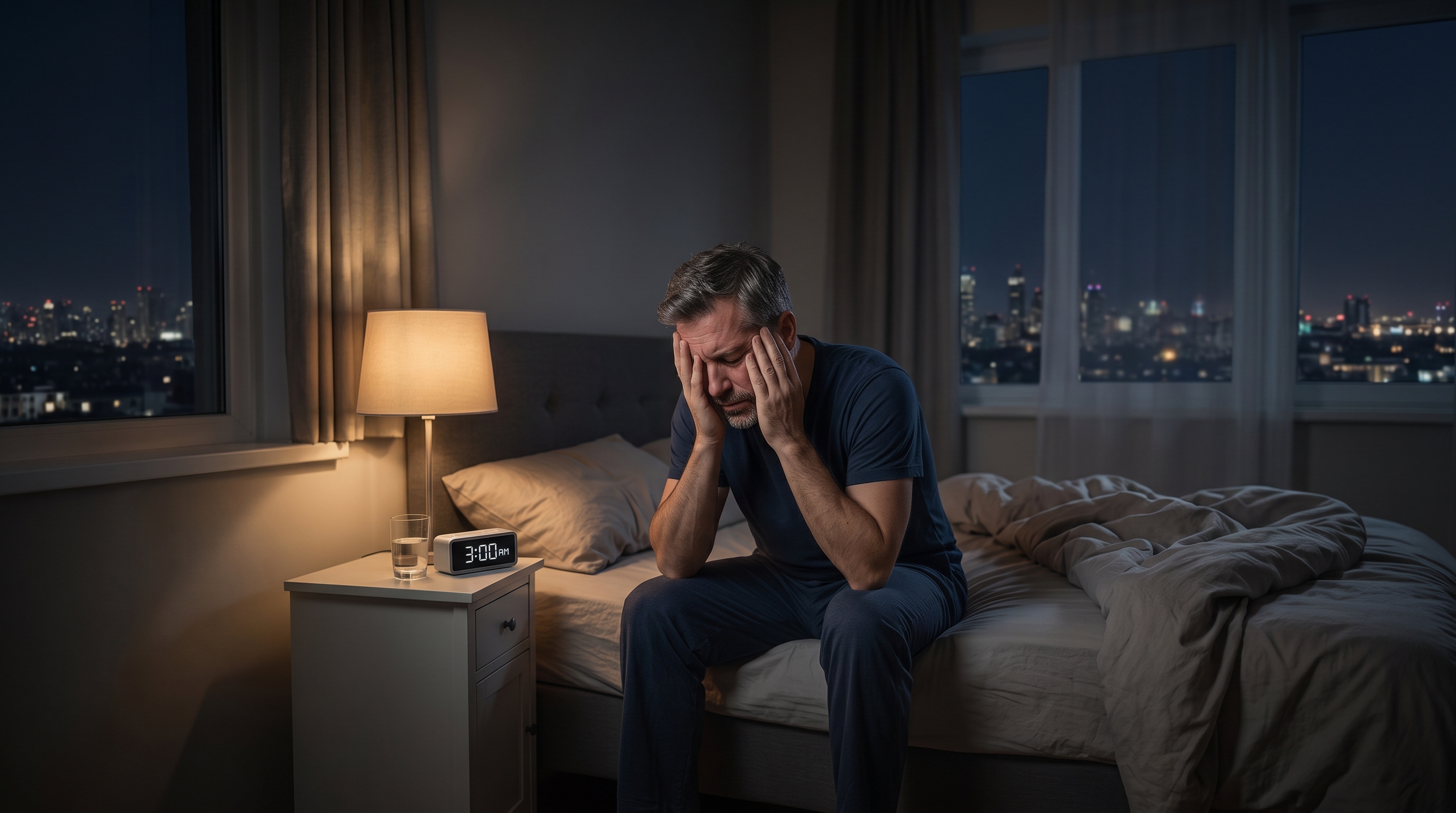
The first half of the night is anchored in deep slow-wave sleep. By 3 AM, the brain enters lighter REM cycles while body temperature drops and the liver must sustain glucose.
لماذا يوقظك جسدك في الساعة الثالثة صباحاً بشكل متكرر؟
Waking between 3 AM and 4 AM is a predictable physiological crossroads where brain architecture, glucose regulation, and stress chemistry intersect.
How nocturnal cortisol surges and reactive hypoglycemia trigger 3 AM wakefulness
Between 2 AM and 4 AM, liver glycogen can dip. The adrenal glands secrete counter-regulatory epinephrine and cortisol to release glucose, accelerating heart rate and waking the cortex.
Sudden alertness at 3 AM is often an adrenaline response to low nighttime blood sugar.
Alcohol rebound, liver glycogen dips, and sympathetic nervous system activation
Alcohol induces early sedation, but its clearance 4-5 hours later triggers sympathetic rebound, raising body temperature and heart rate to disrupt sleep.
Evening alcohol virtually guarantees fragmented early morning sleep.
Sleep architecture: Deep non-REM transitions to light REM sleep after 3 AM
The arousal threshold drops dramatically in the second half of the night. Subtle triggers like room warmth, full bladder, or mild airway resistance wake you easily.
Sleep is naturally lighter after 3 AM, making you hypersensitive to internal disruptions.
How to fall back asleep without looking at the clock or sparking adrenaline
Never check the time. Keep lights off, breathe with 6-second exhalations to stimulate the vagus nerve, and get out of bed only if awake past 25 minutes.
Clock-checking restarts adrenaline; extended slow exhalations signal safety.
متى يجب طلب الرعاية الطبية
- • Waking with gasping, choking, heart racing, or dry parched mouth (sleep apnea signs).
- • Drenching night sweats requiring clothes changes, with unexplained weight loss or fever.
- • Crushing chest pressure, tightness, or pain radiating to jaw or arm upon waking.
- • Severe shortness of breath relieved only by sitting upright in bed.
- • Severe nighttime panic with feeling of doom or confusion.
ما يجب فعله الآن
Keep a 7-day log of dinner, alcohol, bedtime, and wake times. Share with a doctor if night waking lasts more than 3 weeks.
"Night waking is a metabolic and nervous mirror of your day. The body does not reset at night; it processes every debt left unresolved."
ما تلاحظه دكتورة لينا كثيراً
Patients blame insomnia when the real culprit was an 8 PM drink or sweet dessert.
Looking at the clock turns a 90-second micro-wake into a 90-minute insomnia struggle.
Undiagnosed sleep apnea is the most common organic medical cause of 3 AM awakenings.
A small protein-and-fat bedtime snack stabilizes nocturnal blood sugar in 60% of people.
3 AM Nocturnal Glucose & Cortisol Clock
A meal high in simple carbohydrates triggers early postprandial insulin surges. By hour 4-5, blood glucose drops below 70 mg/dL, causing the liver to trigger a compensatory epinephrine/cortisol release that awakens you with a pounding heart.
// كيف يمكن للدكتورة لينا مساعدتك؟ : لماذا يوقظك جسدك في الساعة الثالثة صباحاً بشكل متكرر؟

تلخص بطاقة الرعاية هذه كيف يوضح مساعد الذكاء الاصطناعي DrLina الإشارات الفسيولوجية للجسم. Repeated 3 AM awakenings stem from the physiological transition from deep slow-wave sleep to REM-predominant cycles, where subclinical cortisol surges, reactive hypoglycemia, alcohol withdrawal rebound, or upper airway collapse easily breach the arousal threshold.
لماذا يوقظك جسدك في الساعة الثالثة صباحاً بشكل متكرر؟
يحدث الاستيقاظ المتكرر حوالي 3 فجراً حين تلتقي النصف الثاني من دورة النوم—المحكوم بنوم حركات العين السريعة الخفيف—مع طفرات الكورتيزول، أو نفاد الجليكوجين، أو ارتداد الكحول، أو انقطاع التنفس.
“Repeated 3 AM awakenings stem from the physiological transition from deep slow-wave sleep to REM-predominant cycles, where subclinical cortisol surges, reactive hypoglycemia, alcohol withdrawal rebound, or upper airway collapse easily breach the arousal threshold.”
تعد الأعراض الجسدية (مثل الإرهاق الصباحي المزمن أو التعب المستمر) متعددة العوامل ناتجة عن نمط الحياة أو التوتر أو حالات طبية كامنة. إذا كنت تعاني من نعاس نهاري شديد يعرض القيادة للخطر، أو انقطاع التنفس الليلي، أو ألم في الصدر، فتوجه فوراً للفحص السريري المباشر لدى طبيب مختص.
ماذا تسأل دكتورة لينا عن هذا الموضوع
انقر على أي سؤال لإدراجه مباشرة في مساحة الحوار السريري.
الأسئلة السريرية المتكررة
Why do I wake up at the exact same minute every night?
Sleep operates in 90-110 minute ultradian cycles. If you sleep at 11 PM, cycle 3 ends around 3 AM. A brief micro-wake combined with conditioned habit locks in the timing.
Can low blood sugar wake you from a sound sleep?
Yes. When glucose drops below 70 mg/dL, adrenaline and cortisol spike to stimulate the liver, triggering heart palpitations and sudden mental alertness.
What should I do if I cannot sleep after 20 minutes?
Get out of bed quietly, keep lights low, and read a physical book in a chair until sleepy. Do not check screens or clocks.
Repeated 3 AM awakenings stem from the physiological transition from deep slow-wave sleep to REM-predominant cycles, where subclinical cortisol surges, reactive hypoglycemia, alcohol withdrawal rebound, or upper airway collapse easily breach the arousal threshold.
Primary Scientific Citations
Synthesized by the DrLina Clinical Intelligence Engine and reviewed by the Dr. Lina AI Medical Board against peer-reviewed clinical benchmarks:
Nocturnal awakening patterns, cortisol circadian dynamics, and autonomic arousal in middle-of-the-night insomnia
Hypoglycemia-induced nocturnal awakenings: counter-regulatory epinephrine surges and sleep architecture disruption
Sleep maintenance insomnia and nocturnal sympathovagal imbalance: diagnostic criteria and behavioral management
Malaria, Flu, or Stress? How to Tell the Difference
Why fever, body aches, and fatigue overlap between malaria, viral influenza, and severe stress, and when to test immediately.