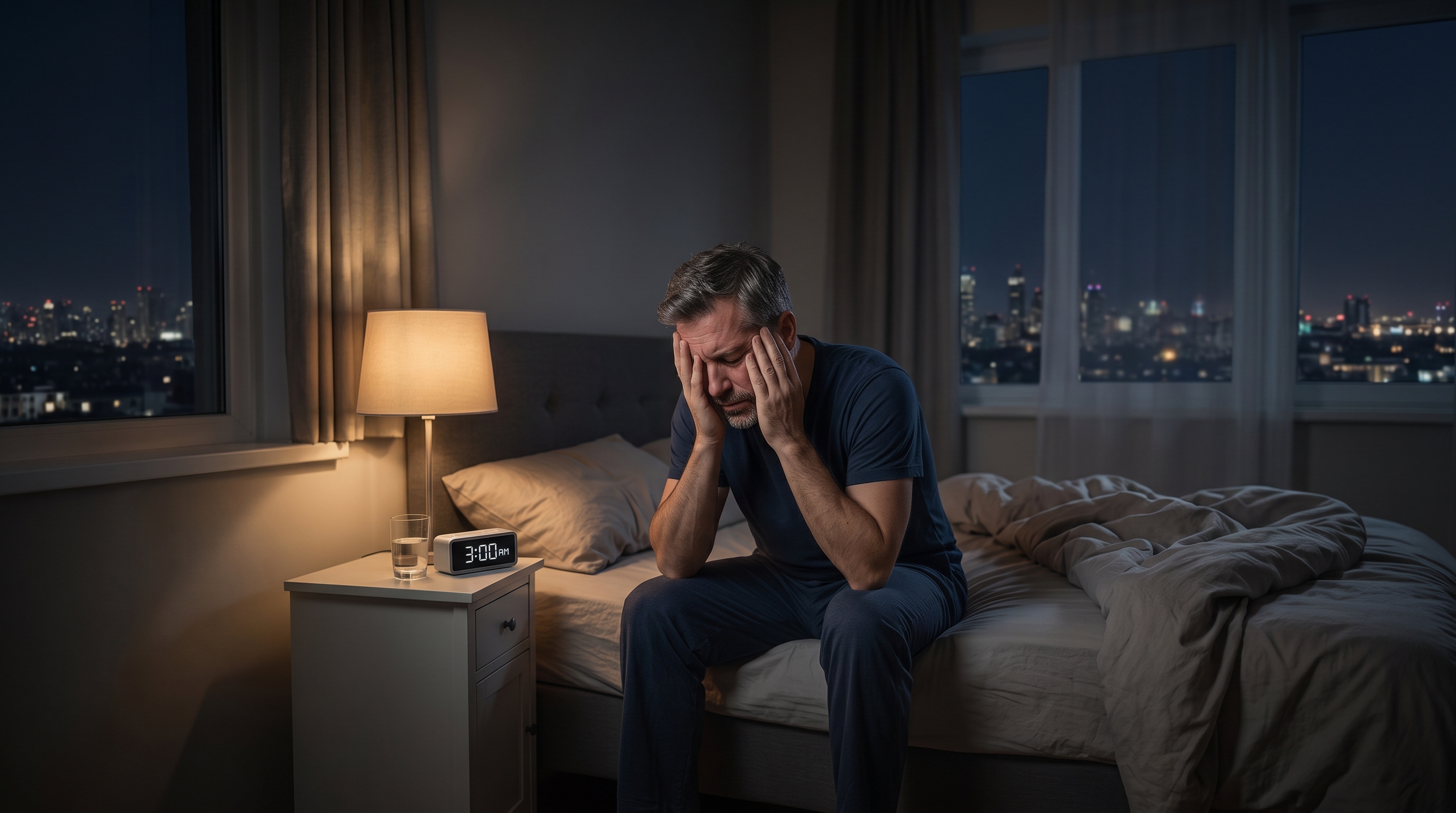
// 生理学机制
The first half of the night is anchored in deep slow-wave sleep. By 3 AM, the brain enters lighter REM cycles while body temperature drops and the liver must sustain glucose.
为什么身体总在凌晨3点反复将你惊醒
Waking between 3 AM and 4 AM is a predictable physiological crossroads where brain architecture, glucose regulation, and stress chemistry intersect.
How nocturnal cortisol surges and reactive hypoglycemia trigger 3 AM wakefulness
Between 2 AM and 4 AM, liver glycogen can dip. The adrenal glands secrete counter-regulatory epinephrine and cortisol to release glucose, accelerating heart rate and waking the cortex.
Sudden alertness at 3 AM is often an adrenaline response to low nighttime blood sugar.
Alcohol rebound, liver glycogen dips, and sympathetic nervous system activation
Alcohol induces early sedation, but its clearance 4-5 hours later triggers sympathetic rebound, raising body temperature and heart rate to disrupt sleep.
Evening alcohol virtually guarantees fragmented early morning sleep.
Sleep architecture: Deep non-REM transitions to light REM sleep after 3 AM
The arousal threshold drops dramatically in the second half of the night. Subtle triggers like room warmth, full bladder, or mild airway resistance wake you easily.
Sleep is naturally lighter after 3 AM, making you hypersensitive to internal disruptions.
How to fall back asleep without looking at the clock or sparking adrenaline
Never check the time. Keep lights off, breathe with 6-second exhalations to stimulate the vagus nerve, and get out of bed only if awake past 25 minutes.
Clock-checking restarts adrenaline; extended slow exhalations signal safety.
何时应就医评估
- • Waking with gasping, choking, heart racing, or dry parched mouth (sleep apnea signs).
- • Drenching night sweats requiring clothes changes, with unexplained weight loss or fever.
- • Crushing chest pressure, tightness, or pain radiating to jaw or arm upon waking.
- • Severe shortness of breath relieved only by sitting upright in bed.
- • Severe nighttime panic with feeling of doom or confusion.
科学应对方案
Keep a 7-day log of dinner, alcohol, bedtime, and wake times. Share with a doctor if night waking lasts more than 3 weeks.
"Night waking is a metabolic and nervous mirror of your day. The body does not reset at night; it processes every debt left unresolved."
DrLina 临床长程观察
Patients blame insomnia when the real culprit was an 8 PM drink or sweet dessert.
Looking at the clock turns a 90-second micro-wake into a 90-minute insomnia struggle.
Undiagnosed sleep apnea is the most common organic medical cause of 3 AM awakenings.
A small protein-and-fat bedtime snack stabilizes nocturnal blood sugar in 60% of people.
3 AM Nocturnal Glucose & Cortisol Clock
A meal high in simple carbohydrates triggers early postprandial insulin surges. By hour 4-5, blood glucose drops below 70 mg/dL, causing the liver to trigger a compensatory epinephrine/cortisol release that awakens you with a pounding heart.
// DrLina 如何帮助您? : 为什么身体总在凌晨3点反复将你惊醒

本健康护理卡总结了 DrLina 人工智能如何解释生理身体信号与症状。 Repeated 3 AM awakenings stem from the physiological transition from deep slow-wave sleep to REM-predominant cycles, where subclinical cortisol surges, reactive hypoglycemia, alcohol withdrawal rebound, or upper airway collapse easily breach the arousal threshold.
为什么身体总在凌晨3点反复将你惊醒
凌晨3点频繁惊醒通常发生在后半夜由浅睡眠和REM阶段主导的时段,与皮质醇激增、肝糖原耗竭、酒精戒断反弹或睡眠呼吸暂停直接重叠。
“Repeated 3 AM awakenings stem from the physiological transition from deep slow-wave sleep to REM-predominant cycles, where subclinical cortisol surges, reactive hypoglycemia, alcohol withdrawal rebound, or upper airway collapse easily breach the arousal threshold.”
身体异常(如慢性晨起疲劳或持续身心乏力)具有多重复杂诱因,涉及生活方式、心理压力或潜在疾病。若出现影响驾驶安全的严重日间嗜睡、夜间呼吸暂停伴窒息感或胸痛,请立即寻求专业执业医师进行线下诊断评估。
关于此症状向 DrLina 提问
点击任意问题即可将其置入临床对话面板中。
常见临床问答
Why do I wake up at the exact same minute every night?
Sleep operates in 90-110 minute ultradian cycles. If you sleep at 11 PM, cycle 3 ends around 3 AM. A brief micro-wake combined with conditioned habit locks in the timing.
Can low blood sugar wake you from a sound sleep?
Yes. When glucose drops below 70 mg/dL, adrenaline and cortisol spike to stimulate the liver, triggering heart palpitations and sudden mental alertness.
What should I do if I cannot sleep after 20 minutes?
Get out of bed quietly, keep lights low, and read a physical book in a chair until sleepy. Do not check screens or clocks.
Repeated 3 AM awakenings stem from the physiological transition from deep slow-wave sleep to REM-predominant cycles, where subclinical cortisol surges, reactive hypoglycemia, alcohol withdrawal rebound, or upper airway collapse easily breach the arousal threshold.
Primary Scientific Citations
Synthesized by the DrLina Clinical Intelligence Engine and reviewed by the Dr. Lina AI Medical Board against peer-reviewed clinical benchmarks:
Nocturnal awakening patterns, cortisol circadian dynamics, and autonomic arousal in middle-of-the-night insomnia
Hypoglycemia-induced nocturnal awakenings: counter-regulatory epinephrine surges and sleep architecture disruption
Sleep maintenance insomnia and nocturnal sympathovagal imbalance: diagnostic criteria and behavioral management
Malaria, Flu, or Stress? How to Tell the Difference
Why fever, body aches, and fatigue overlap between malaria, viral influenza, and severe stress, and when to test immediately.